
From the Hive
We Now Teach American Red Cross CPR and AED Training
BeeReady now teaches American Red Cross CPR and AED for a requested $50 donation per person. We can officially train people ourselves, and we bring that training to youth sports sidelines.
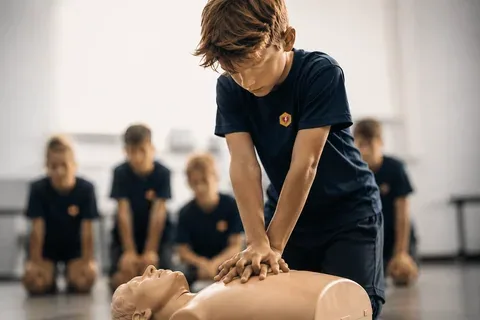
Here is the topline: BeeReady now trains people in American Red Cross CPR and AED for a requested $50 donation per person. We can officially train people ourselves, and we bring that training to the youth sports sidelines where coaches, parents, and volunteers already gather.
Continue learning about We Earned a Candid Seal of Transparency, We Are Officially a 501c3 Nonprofit and Our First Week on the Sidelines.
BeeReady started by bringing American Heart Association CPR, AED, and Basic Life Support training to youth sports sidelines. That path served our first season well. Today we are making a clear change that lets us do more of the work ourselves: we now teach American Red Cross CPR and AED training, and we are authorized to train people officially under that program.
Why we switched
Our mission has not changed. We still exist so that coaches, parents, volunteers, and young athletes know what to do when someone collapses on a field, court, or pool deck. What has changed is how we deliver that training. Moving to the American Red Cross lets our own team train people directly with certified American Red Cross CPR and AED instruction, instead of relying only on outside training arrangements. That means more flexibility on the sideline, more sessions when leagues need them, and a simpler path from sign-up to hands-on practice.
American Red Cross CPR and AED training covers the same core skills every sideline needs: recognizing a cardiac emergency, calling for help, delivering high-quality chest compressions, using an automated external defibrillator safely, and helping someone who is choking with abdominal thrusts. We do not teach hands-only awareness as a substitute for full CPR and AED training. Our classes are hands-on, practical, and built for the people who already stand next to young athletes every week.
How training works now
If you help run a league, coach a team, join the Bee Team, or simply want your family ready, you can train with us. We bring American Red Cross CPR and AED instruction to the places where youth sports already gather, so busy parents and coaches do not have to hunt for a class across town. We can schedule training around practices, games, and community events, and we will work with your group on the size and timing that fit your sideline.
The 50 Dollar Donation Request
For each individual who trains with us, we request a $50 donation. That is our topline ask. The gift helps cover training materials, instructor time, AED program costs, and the work of getting more ready people onto more youth sports fields. BeeReady is a 501(c)(3) nonprofit, so donations are tax-deductible to the extent allowed by law. When you are ready to book training for yourself, your team, or your league, plan on $50 per person.
Who should train with us
Youth sports readiness is a team effort. Coaches and officials are often first on the scene. Parents and grandparents fill the stands every weekend. Teen athletes can learn skills that protect teammates and younger siblings. Bee Team volunteers get ready so they can help with sideline response at events. If any of those roles sound like you, American Red Cross CPR and AED training with BeeReady is for you. We will meet your group where it already gathers and make the session practical for real fields, gyms, and pool decks.
What stays the same
We are still a physician-led nonprofit based in Durham, North Carolina. We still put AEDs and emergency readiness at the center of youth sports safety. We still build the Bee Team so kids and adults can lead on the sideline together. And we still believe that the people closest to a collapsed athlete should already know how to start CPR, use an AED, and stay calm until EMS arrives.
If you help run a league, coach a team, want to join the Bee Team, or simply want your family trained in American Red Cross CPR and AED, reach out through our site. We would love to bring training to your community. This article is educational and is not a substitute for hands-on, certified training from a qualified instructor.