
From the Hive
How to Use an AED: A Step by Step Guide
Modern AEDs are designed for anyone to use. A step by step guide for coaches, parents, and bystanders: when to use an AED, how to place the pads, and what to expect when it matters most.
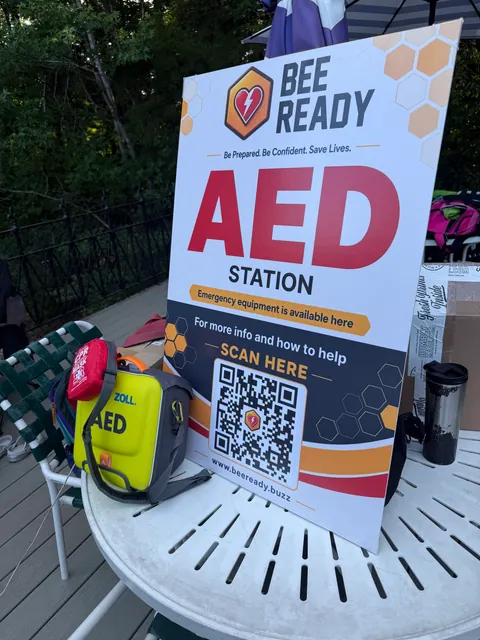
To use an AED, call 911, start CPR, turn on the device as soon as it arrives, place the pads as pictured, stand clear while it analyzes, and follow its voice prompts. AEDs are built for ordinary people and will not deliver a shock unless it is needed. This guide explains each step for coaches, parents, and bystanders.
Continue learning about AED Maintenance 101: Keeping Your Device Ready to Save a Life, Real Saves: Young Athletes Rescued by an AED and Fast CPR and AEDs in Athletics: Defibrillators for Sports Facilities and Stadiums.
What an AED is and how it works
An AED is a small, portable device that reads a person's heart rhythm through adhesive pads placed on the chest. In sudden cardiac arrest, the heart often quivers in a chaotic rhythm instead of pumping blood. If the AED detects one of these shockable rhythms, it delivers a brief electrical shock that can help the heart reset and resume a normal beat. If the rhythm does not call for a shock, the device simply will not deliver one. Every modern AED gives clear voice instructions from the moment you turn it on.
When to use an AED
Use an AED any time a person is unresponsive and not breathing normally. Tap their shoulders, shout their name, and look at their breathing. Occasional gasps are not normal breathing; they are a common sign of cardiac arrest. If the person does not respond and is not breathing normally, treat it as cardiac arrest. You do not need to check for a pulse, and you do not need to be certain. Send for the AED and let the device decide whether a shock is needed.
How to use an AED step by step
- Call 911, or point at one specific person and tell them to call.
- Send someone for the nearest AED while you start chest compressions.
- Push hard and fast in the center of the chest, and keep going until the AED arrives.
- Turn the AED on and follow its voice prompts.
- Bare the person's chest completely, and dry it if it is wet.
- Attach the pads to bare skin exactly as the pictures on the pads show.
- Make sure nobody is touching the person while the AED analyzes.
- If it advises a shock, say loudly to stand clear, check that everyone has, and press the flashing button.
- Resume CPR immediately, shock or no shock, and keep following the prompts until responders arrive or the person wakes up.
First, call 911, or point at a specific person and tell them to call. Then send someone else to grab the nearest AED while you start chest compressions right away: push hard and fast in the center of the chest and keep going until the AED arrives. Compressions keep blood moving to the brain and heart, and every minute without them lowers the chance of survival.
When the AED arrives, turn it on and follow the voice prompts. Bare the person's chest completely, and dry it quickly if it is wet, as it might be at a pool. Attach the pads to bare skin exactly as the pictures on the pads show. When the device says it is analyzing, make sure no one is touching the person. If the AED advises a shock, say loudly that everyone should stand clear, check that they have, and press the flashing button. Whether or not a shock is delivered, resume CPR immediately and keep following the prompts until emergency responders arrive or the person starts to wake up.
AED pad placement
For adults and older children, one pad goes on the upper right side of the chest just below the collarbone, and the other on the lower left side, a few inches below the armpit. Each pad has a picture showing where it goes. For young children, roughly under eight years old, use child or pediatric pads and a pediatric setting if the AED has them. If only adult pads are available, use them: place one pad in the center of the chest and one on the center of the back so the pads do not touch each other. The most important rule is simple: do not delay. An AED used quickly beats a perfect setup that comes too late.
Common fears and myths
The biggest myth is that you can hurt someone by using an AED. A person in cardiac arrest is already in the worst possible situation, and the AED is their best chance. The device analyzes the rhythm on its own and will not deliver a shock to a heart that does not need one, so you cannot accidentally shock a heart that is beating normally. Bystanders are also protected legally: every US state has some form of Good Samaritan law that protects people who provide emergency help in good faith. The only real mistake is doing nothing.
Why hands-on certified training matters
Reading about AEDs is a great start, but confidence comes from practice. In a certified course you rehearse the whole sequence on manikins and AED trainers until it feels natural, with an instructor checking your technique. That is why BeeReady volunteers train and certify through American Red Cross CPR, AED, and Basic Life Support courses, and why we bring that training to youth sports communities for free.
Want CPR and AED training for your league, team, or family? Reach out through our site; we would love to help your sideline get ready. And remember: this article is educational and is not a substitute for hands-on, certified training from a qualified instructor.