
From the Hive
Hands Only CPR vs Full CPR Certification
Hands-only CPR is the continuous chest compressions any untrained bystander can do when a teen or adult suddenly collapses. Here is when it is the right call, when rescue breaths still matter, and how it differs from the full American Red Cross CPR, AED, and BLS certification BeeReady brings to youth sports sidelines.
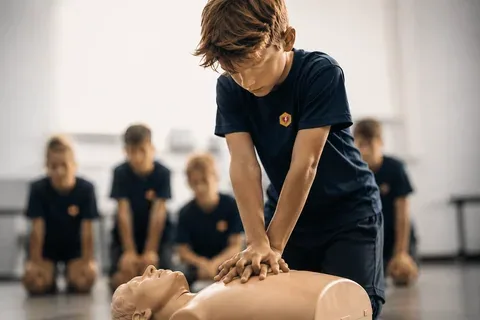
If you have ever worried that you would freeze during a medical emergency because you are not trained, hands-only CPR was created for exactly that moment. It is a simplified form of CPR that anyone can do: no rescue breaths, no certification card, just steady chest compressions until help arrives. The American Heart Association promotes it because doing something is far better than doing nothing when a heart suddenly stops. At BeeReady, we teach the full picture, and understanding where hands-only CPR fits, and where it does not, helps every family and league be ready.
Continue learning about Where to Find Free CPR Classes, How Old Do You Have to Be to Get CPR Certified and What Basic Life Support Training Covers for Young Athletes.
What hands only CPR is
Hands-only CPR is continuous chest compressions without mouth-to-mouth rescue breaths. The idea is simple: if you see a teen or adult suddenly collapse, call 911, then push hard and fast in the center of the chest at about 100 to 120 compressions per minute, and keep going until an AED or emergency responders arrive. Skipping the breaths removes the step that makes many bystanders hesitate, and it keeps blood and the oxygen already in the body moving to the brain and heart. For an untrained bystander, hands-only CPR is easier to remember and easier to start, and starting quickly is what saves lives.
When hands only CPR is the right call
The American Heart Association recommends hands-only CPR for a teen or adult who suddenly collapses in a public setting, especially when the rescuer is untrained or unsure about giving rescue breaths. In these sudden collapses, the blood still holds oxygen for the first several minutes, so compressions alone can keep that oxygen circulating. If you are not trained, or you are trained but not confident, hands-only CPR is exactly what you should do. The worst choice in a cardiac emergency is to stand back and wait, and hands-only CPR gives every bystander a way to help immediately.
When rescue breaths still matter
Hands-only CPR is not the answer for every emergency. Infants and young children in cardiac arrest usually need rescue breaths, because their emergencies are more often caused by a breathing problem than a sudden heart rhythm. The same is true for drowning and for drug overdoses, including opioid emergencies, where the person has stopped breathing and their blood oxygen is already low. In these situations, the breaths are not optional extras; they are part of the care that gives the person the best chance. Knowing the difference is exactly what full training teaches.
What full CPR and AED certification adds
Full CPR and AED certification builds on the basics and adds the skills hands-only CPR leaves out. You learn how to give effective rescue breaths, how to adjust technique for children and infants, and how to use an automated external defibrillator to restore a normal heart rhythm. Certification also covers how to help a choking person and how to respond as part of a team, and it ends with a skills check where an instructor verifies your technique on a manikin. Passing earns a certification card that is valid for two years. In short, hands-only CPR is what anyone can do in the moment, and full certification is what prepares you to handle the emergencies that need more.
What BeeReady brings to the sideline
This is where our mission comes in. BeeReady teaches full American Red Cross CPR, AED, and Basic Life Support training, not hands-only CPR. We bring that certified, skills-verified level of readiness, along with AED devices, to the youth sporting events where families already gather. Hands-only CPR is the floor, the thing every parent and coach in the stands can and should do the instant someone collapses. Full certification is the ceiling, and it is the standard we hold our volunteers to so that a sideline has more than good intentions when seconds count. We want both on every field: bystanders ready to push hard and fast right away, and trained responders ready to do everything else.
Want CPR and AED training for your league, team, or family? Reach out through our site; we would love to help your sideline get ready, from the first bystander to a fully certified Bee Team. And remember: this article is educational and is not a substitute for hands-on, certified training from a qualified instructor.