From the Hive
CPR for Kids and How to Teach It
Can kids learn CPR? Absolutely. A guide for parents and coaches on teaching children CPR and AED basics, and how child CPR differs from adult CPR.
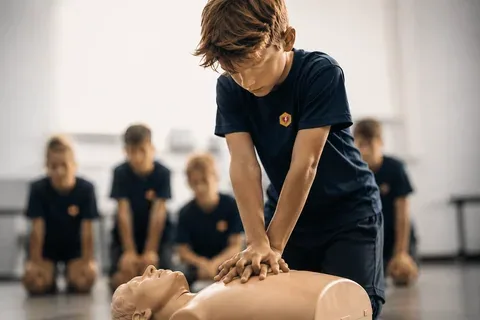
One of the most common questions we hear is whether children are old enough to learn CPR. The answer is yes. Kids as young as elementary-age can learn the basics, and children who practice these skills are more likely to act calmly and confidently in a real emergency. At BeeReady, teaching CPR for kids is at the heart of what we do.
Continue learning about How to Do Infant CPR, Our First Week on the Sidelines and We Now Teach American Red Cross CPR and AED Training.
Why teach kids CPR
Cardiac arrest can happen anywhere, including on a youth sports field. When it does, the people closest are often other kids, parents, and coaches. Teaching children CPR turns bystanders into responders. It also builds lifelong confidence, leadership, and a sense of responsibility that carries far beyond the field.
Meeting kids where they are
Youth sports bring families and communities together every week. That makes practices and games a natural setting for CPR training and AED awareness. Instead of a one-time classroom session that is quickly forgotten, we weave readiness into the rhythm of the season.
How CPR for kids differs from adult CPR
The core idea is the same: push hard and fast in the center of the chest to keep blood moving. The differences come down to size and strength. For older children and teens, the technique closely mirrors adult CPR. For younger or smaller children, instructors teach how to adjust hand placement and depth. Certified training is the best way to learn these details correctly, which is why our volunteers train through the American Red Cross.
What kids can learn
In an age-appropriate session, children can learn how to recognize an emergency, call 911, start chest compressions, and find and use an AED. They practice on manikins so the movements become familiar. The goal is not to turn kids into paramedics. It is to make sure that if a heart stops near them, they know what to do in the first critical minutes.
AEDs on the sideline
Training is only half of readiness. We also work to place AEDs where kids play, so that if sudden cardiac arrest ever happens, the right equipment is within reach in the minutes that matter most.
Practice makes prepared
Skills fade without practice, so we make training hands-on and repeatable. Our Bee Team model lets kids practice together, cheer each other on, and keep their skills sharp season after season. The more familiar these steps feel, the more likely a child is to act when seconds count.
Want to bring CPR and AED training to your league or family? Reach out through our site. And remember: this article is educational and is not a substitute for hands-on, certified training from a qualified instructor.