
From the Hive
CPR Certification Renewal: When and How to Renew
American Red Cross and American Heart Association CPR certifications are valid for two years, and skills fade long before that. Here is when and how to renew your CPR certification, from checking your expiration date to instructor-led and blended learning options, plus tips for keeping your skills fresh between classes.
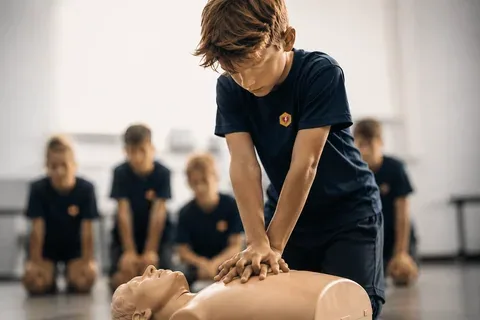
If you took a CPR course a couple of years ago and feel ready for anything, here is a question worth asking: is your certification still current? American Red Cross and American Heart Association CPR, AED, and Basic Life Support certifications are valid for two years, and letting one lapse is easy to do when life gets busy. Renewing is not just paperwork. It is a chance to sharpen skills that fade over time and to catch up on any updates to the guidelines. This guide covers when to renew, how to renew, and what to expect.
Continue learning about Where to Find Free CPR Classes, Hands Only CPR vs Full CPR Certification and How Old Do You Have to Be to Get CPR Certified.
Why CPR certification renewal matters
There are two big reasons renewal matters, and neither is about the card in your wallet. The first is that hands-on skills fade. Research on CPR retention has found that the quality of compressions and rescue breaths can start to slip within a few months of a class, well before the two-year card expires, especially without practice in between. The second reason is that resuscitation guidelines are reviewed and updated over time as the science improves. A renewal course makes sure your technique reflects current resuscitation guidelines rather than what was taught several years ago. Staying certified keeps both your skills and your knowledge current.
How to check when your certification expires
Every American Red Cross or American Heart Association course completion card, often called an eCard, lists an issue date and an expiration date exactly two years later. If you have a digital eCard, you can look it up online through the American Heart Association eCard system using the email you trained under. If you hold a physical card, check the printed expiration date. A good rule of thumb is to plan your renewal for the month before that date, so you are never caught with a lapsed certification. Employers and leagues that require proof will look at that expiration date, so it pays to know yours.
Your renewal options
When it is time to renew, you generally have two paths. The first is a traditional instructor-led class, where you spend a few hours in person learning and practicing, then complete a skills check with an instructor. The second is blended learning, which splits the course into online coursework you finish at your own pace followed by a shorter in-person skills session where you demonstrate compressions, rescue breaths, and AED use on a manikin. Blended learning suits busy coaches and parents who want to handle the knowledge portion from home and keep the in-person time short. Both paths end the same way, with a hands-on skills check and a new two-year card, because there is no way to certify real CPR skill without doing it in person.
What a renewal class covers versus a first time class
A renewal class covers the same core skills as a first-time course: recognizing an emergency, calling for help, high-quality chest compressions, rescue breaths, and using an AED. The difference is usually pace. Because you have done it before, a renewal often moves faster and spends more time refreshing technique and highlighting what has changed since your last class than teaching every concept from scratch. That said, if your certification has been expired for a long time, an instructor may recommend the full course instead, since a renewal assumes your foundation is still reasonably fresh. When you sign up, choose the course that matches the certification you hold, whether that is Heartsaver or Basic Life Support.
Keeping your skills fresh between renewals
You do not have to wait two years to touch these skills again. A few minutes of practice now and then goes a long way. Push hard and fast on a firm cushion to keep the rhythm of compressions in your muscle memory, and mentally walk through the steps of calling 911, starting CPR, and grabbing the nearest AED. Some people set a yearly reminder to review, and free refreshers and hands-on practice kiosks show up in many communities. Practicing with family or teammates makes it stick and means more than one person is ready. The goal is simple: when the two-year renewal comes around, it feels like a tune-up rather than starting over.
A reminder for coaches, referees, and league volunteers
If you spend your weekends on a sideline, your certification is part of your gear. Coaches, referees, and league volunteers are often the closest trained people when a young athlete or a spectator collapses, so a current card on the sideline can make the difference in those first crucial minutes. A simple habit helps: renew before each season starts, the same way you check equipment and rosters. When every team has at least one person whose certification is current, someone ready to act is always on the field.
At BeeReady, we bring American Red Cross CPR, AED, and Basic Life Support training, along with AED devices, to the youth sporting events where families already gather, and we love helping coaches and parents keep their certifications current season after season. If you would like to bring training or renewal to your league or family, reach out through our site and we would love to help everyone stay ready. And remember: this article is educational and is not a substitute for hands-on, certified training from a qualified instructor.