
From the Hive
Real Saves: Young Athletes Rescued by an AED and Fast CPR
Real young athletes have survived sudden cardiac arrest because bystanders started CPR at once and an AED was within reach. Here are their stories, and why every youth sports field needs an AED and people trained in CPR and AED use.
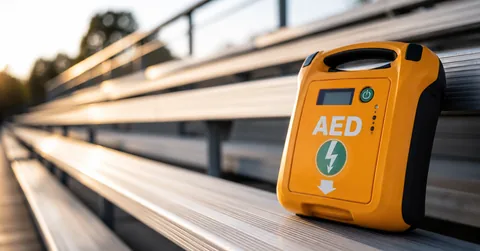
Sudden cardiac arrest can strike a young athlete who looks perfectly healthy, and when it does, the minutes that follow decide everything. The stories below are real. Each one is a young person whose heart suddenly stopped on a field, a court, or a pitch, and who is alive today because the people nearby recognized the emergency, started CPR right away, and had an automated external defibrillator (AED) within reach. Read together, these saves point to the same simple lesson that drives our work at BeeReady.
Continue learning about How to Use an AED: A Step by Step Guide, AEDs in Athletics: Defibrillators for Sports Facilities and Stadiums and AED Maintenance 101: Keeping Your Device Ready to Save a Life.
Ashtyn Messinger, saved on a Sequim soccer field
In May 2026, 12-year-old Ashtyn Messinger collapsed during soccer tryouts at a community park in Sequim, Washington. Coaches and parents called 911, began CPR, and used an AED to shock her heart before she was airlifted to Seattle Children’s Hospital. Ashtyn had been born with heart defects but had been cleared to play, and her cardiac arrest caught everyone by surprise. She survived and later received an implantable defibrillator. Her mother credited the quick thinking, the CPR, and the fact that an AED was there for saving her daughter’s life.
Spencer Davis, a football player revived after a hard hit
Spencer Davis was 16 when a collision on a punt return dropped him during a Pennsylvania high school football practice. His coach, Rodney Chism, saw him crumple and, as Spencer’s lips began to turn blue, recognized that this was cardiac arrest, not an ordinary injury. Chism and another coach pulled off Spencer’s helmet and pads and started CPR, and a defibrillator was used to restore his heartbeat. Fast recognition and an AED on hand turned a near tragedy into a recovery.
Ryan Chian, a teen saved at tryouts
Fifteen-year-old Ryan Chian had run a mile in gym class and then headed to basketball tryouts when he suddenly sank to the floor, unresponsive for nearly ten minutes. A pair of lifeguards nearby started CPR immediately, and when paramedics arrived they used an AED to shock his heart back into rhythm. Ryan recovered and now urges everyone to learn CPR, saying you never know when you might need it. His save is a reminder that trained bystanders and a working AED are the difference between life and death.
Christian Eriksen, a cardiac arrest survived on the world stage
The most watched save of all happened in front of millions. During Denmark’s opening match against Finland at Euro 2020, midfielder Christian Eriksen collapsed on the pitch. Medical staff started CPR within seconds and used a defibrillator to restart his heart before he was taken to the hospital, and he later returned to professional football. His collapse pushed the Premier League to fund more than 2,000 defibrillators for grassroots clubs and facilities across the UK, so the same equipment that saved him would be waiting at fields where children play.
The common thread in every save
Different sports, different ages, different countries, and yet the same chain of events saved each of these athletes. Someone recognized the collapse as cardiac arrest and did not wait. Someone started chest compressions immediately to keep blood and oxygen moving to the brain. And an AED was close enough to deliver a shock within minutes, because survival can fall sharply with every minute that passes without CPR and defibrillation. Recognition, fast CPR, and early defibrillation are the links that hold, and none of them work without the other two.
Why every youth field needs an AED and trained bystanders
These stories are inspiring, but they are not luck. Each save depended on preparation that was in place before the emergency began: an AED that was present and charged, and people who knew how to use it. That is exactly why every youth sports field, gym, and pool deck needs an accessible AED and bystanders trained in CPR, AED, and Basic Life Support. When equipment and skills arrive together, a collapse that could end a life becomes a story about a young athlete who got a second one.
At BeeReady, a physician-led 501(c)(3) nonprofit, we bring American Red Cross CPR, AED, and Basic Life Support training, along with AED devices, to the youth sporting events where families already gather, so more sidelines are ready for the day they hope never comes. If you help run a league, coach a team, or simply want your family prepared, reach out through our site and we would love to help your community get ready. And remember: this article is educational and is not a substitute for hands-on, certified training from a qualified instructor.